




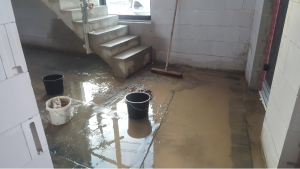
A leaking basement can be stressful because the source of the water is not always obvious. Water may appear along the floor, around wall cracks, near windows, under baseboards, or in corners after heavy rain or melting snow.
Basement leaks usually happen when water finds a way through the foundation, around openings, or through drainage problems near the home. Below, this basement waterproofing company in Park Ridge, Illinois is going to discuss some of the most common reasons basements leak, and we’ll also explain why identifying the source of the water is an important first step.
Water May Be Entering Through Foundation Cracks
Foundation cracks are one of the most common sources of basement leaks. Even small cracks can allow water to enter when soil around the foundation becomes saturated.
Cracks may appear in basement walls, near corners, around pipe penetrations, or along areas where the foundation has shifted over time. Some cracks may only leak during heavy rain, while others may allow moisture in more regularly. If water is appearing in the same spot after storms, a foundation crack may be part of the problem.
Poor Exterior Drainage Can Push Water Toward the Home
Water should move away from the foundation, not toward it. If the soil around the home slopes inward, or if downspouts discharge too close to the foundation, water may collect near the basement walls.
Homeowners in the Park Ridge area may notice basement leaks after heavy rain when gutters overflow, downspouts are too short, or yard grading directs water toward the house. Over time, this extra pressure can make it easier for water to find weak points in the foundation.
Window Wells Can Fill with Water
Basement windows and window wells can also be a source of leaks. If a window well does not drain properly, rainwater can collect against the window and eventually seep inside.
This may happen when the drain is clogged, the well is too low, the cover is damaged, or surrounding soil allows too much water to collect in that area. Water stains, dampness beneath the window, or puddling nearby may be signs that the window well should be inspected.
Hydrostatic Pressure Can Force Water Inside
When soil around the foundation becomes saturated, water pressure can build against basement walls and floors. This pressure is known as hydrostatic pressure, and it can force water through cracks, joints, porous concrete, or the point where the wall meets the floor.
In some homes, managing groundwater with the right drainage system is necessary to reduce recurring seepage. A qualified basement waterproofing company in Park Ridge, Illinois can evaluate whether water pressure around the foundation is contributing to the leak.
The Sump Pump May Not Be Keeping Up
A sump pump helps remove water that collects around the foundation or beneath the basement floor. If the sump pump is not working properly, is too small for the volume of water entering the basin, or turns on too late, water may back up or seep into the basement.
Some signs of sump pump problems include frequent cycling, strange noises, failure to activate, a high water level in the pit, or water returning after the pump runs. If basement leaks appear during storms, the sump pump should be checked as part of the overall waterproofing evaluation.
Drain Tile Issues Can Lead to Water Seepage
Drain tile systems are designed to collect water and direct it toward a sump basin or another drainage path. If the system is missing, clogged, damaged, or no longer moving water effectively, moisture may collect around the foundation.
This can lead to seepage along the basement floor, around wall joints, or in low areas of the basement. Drain tile problems are not always visible from inside the home, but they can play a major role in recurring basement leaks.
Plumbing Leaks Can Sometimes Look Like Basement Seepage
Not every basement leak comes from groundwater. Sometimes the source is inside the home. A leaking pipe, water heater issue, laundry connection, utility sink, or plumbing fixture can create moisture that looks like basement seepage.
Before assuming the problem is foundation-related, it is important to consider when the water appears. If it shows up during or after plumbing use, the source may be different than a rain-related leak.
A Professional Inspection Can Identify the Source
Basement leaks can have more than one cause. A home may have a foundation crack, poor grading, sump pump issues, and drainage concerns at the same time. This is why guessing at the source can lead to incomplete repairs.
An experienced basement waterproofing company in Park Ridge, Illinois can inspect the basement, review exterior drainage conditions, evaluate the sump pump, and recommend the right next steps based on where the water is coming from.
Looking for a Basement Waterproofing Company in Park Ridge, Illinois?
A basement may leak because of foundation cracks, poor drainage, window well problems, hydrostatic pressure, sump pump issues, drain tile concerns, or plumbing leaks. If water keeps entering your basement, a professional basement waterproofing company in Park Ridge, Illinois can help find the source and recommend a solution that fits your home.
At ULB-DRY Waterproofing, we’re here to help homeowners throughout Park Ridge and the surrounding communities address all types of basement water problems. Contact us to request a free in-home consultation.