




Drain tiles are a system of perforated pipes that run around the edges of your home’s foundation and collect groundwater before it can leak into your basement. That water is then carried to a sump pump, or another safe drainage point so it can be moved away from the house.
Many homeowners know what a drain tile system does — but many do not know how deep it should be installed. Is it installed in a shallow trench near the surface, or does it go much lower? This drain tile installer in Des Plaines, Illinois is going to explain below.
Why is depth important in the first place?
Groundwater does not stay near the surface. It can build up around the foundation and even under the basement floor.
The drain tile will only catch the shallow water if it is installed too high. The deeper water can still get inside through small cracks and cause seepage. A pipe installed at the correct depth will collect this deeper groundwater before it rises.
How deep are drain tiles normally installed?
Interior drain tiles
Interior drain tiles are installed by cutting the concrete along the inside edges of the basement floor and digging a trench down to the foundation footing. The pipe is placed right next to this footing because it is usually the lowest point around the basement and that is where water tends to collect first.
A professional drain tile installer in Des Plaines, Illinois will aim for the deepest practical placement. They do this so water flows into the pipe instead of into the basement.
Exterior drain tiles
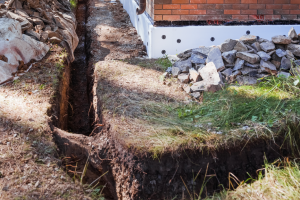
Exterior drain tiles also need to be installed at a similar depth. The installation requires digging around the outside of the home to reach that level. After the pipe is installed, gravel is added around it so water can move freely into the drain tile system.
This depth is crucial because exterior drain tile is supposed to stop groundwater before it reaches the foundation wall. If the pipe is too high, it will miss the water that collects at the lower levels.
Many people confuse drain tiles with French drains, which tend to be much closer to the surface. French drains are good for handling surface runoff, but they cannot protect a basement from rising groundwater. A proper drain tile system must be near the foundation base because that is where water pressure is highest.
What factors determine the depth of a drain tile system?
- The foundation: A deeper foundation requires the drain tile to be installed lower. This is because the drain tile needs to be right next to the footing, or just slightly below it.
- Soil conditions: If the soil around your home traps moisture, the drain tile may need to be installed a little lower to catch that water before it reaches the basement floor.
- Water flow: The drain tile needs a slight slope so the collected water can move toward the sump pit or discharge line. A layer of gravel around the pipe will help the water flow into it without resistance.
A professional drain tile installer in Des Plaines, Illinois will check all these conditions before deciding how deep the system should go.
Looking for a drain tile installer in Des Plaines, Illinois?
Are you not completely sure if your drain tile was installed at the correct depth? If so, and if you’re looking for a drain tile installer in Des Plaines, Illinois that can help you make that determination, ULB-DRY Waterproofing is here to help. Our team can determine the proper depth for your drain tile system so water around your home can be effectively handled. Contact us today to start the process.